
These essays look closely at Constantine Andreou’s sculpture, coloured reliefs, and painting. They consider individual works alongside the artist’s own statements and the writing of critics and art historians. Each essay includes illustrations or links to the works discussed, together with references to its sources.
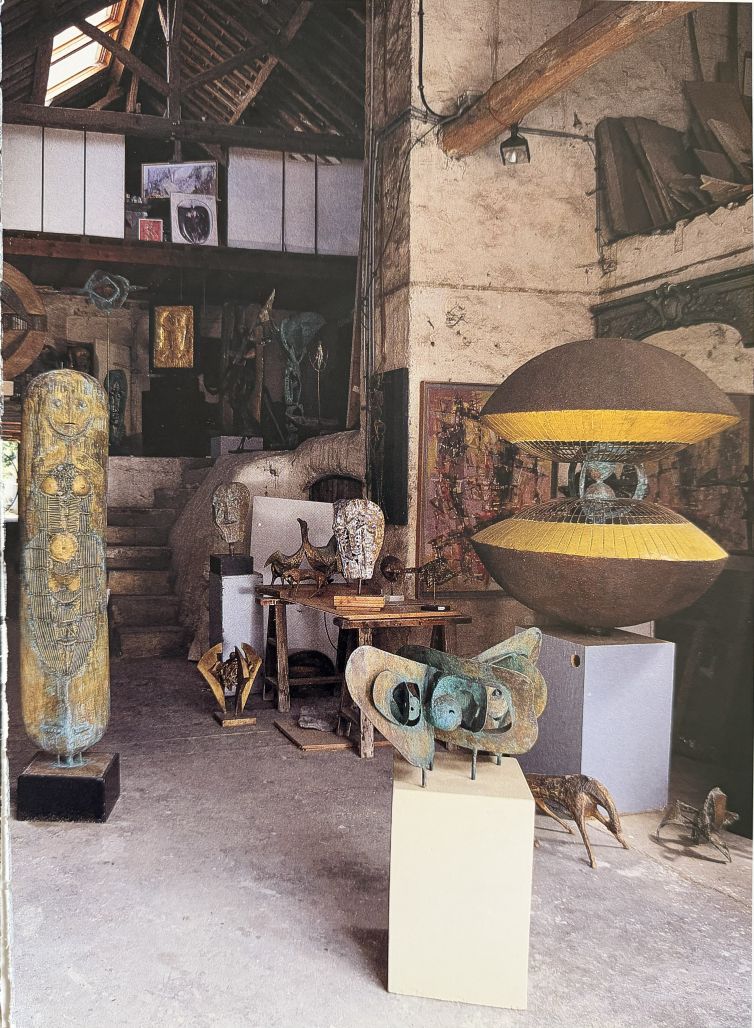
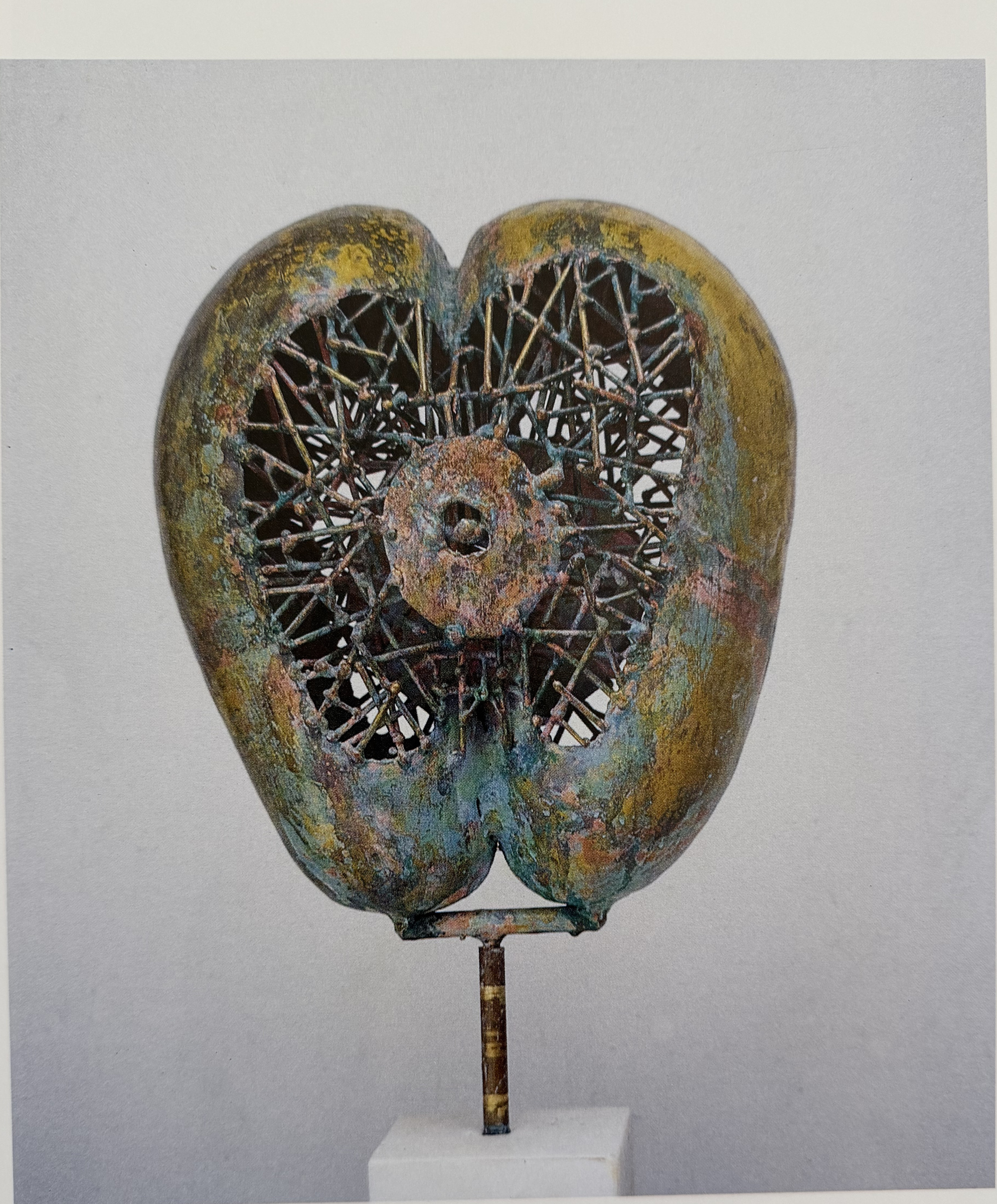
Drawing in space: Andreou’s sculpture
Andreou described working with brass wire as drawing in space. Plates, rods, and openings give form to that idea, allowing the eye to move between the outer shape of a sculpture and the structure within.
Birds and the dream of flight
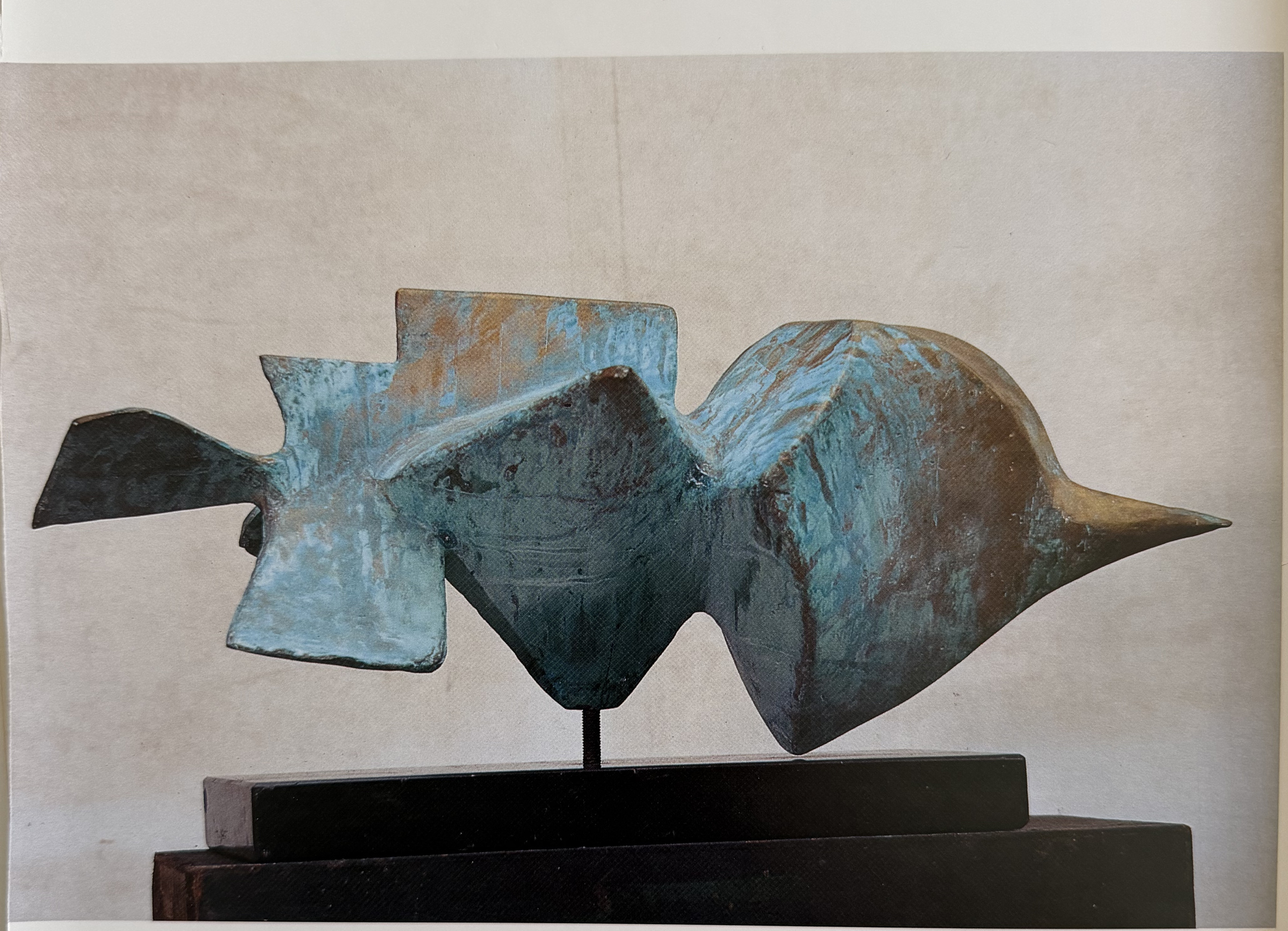
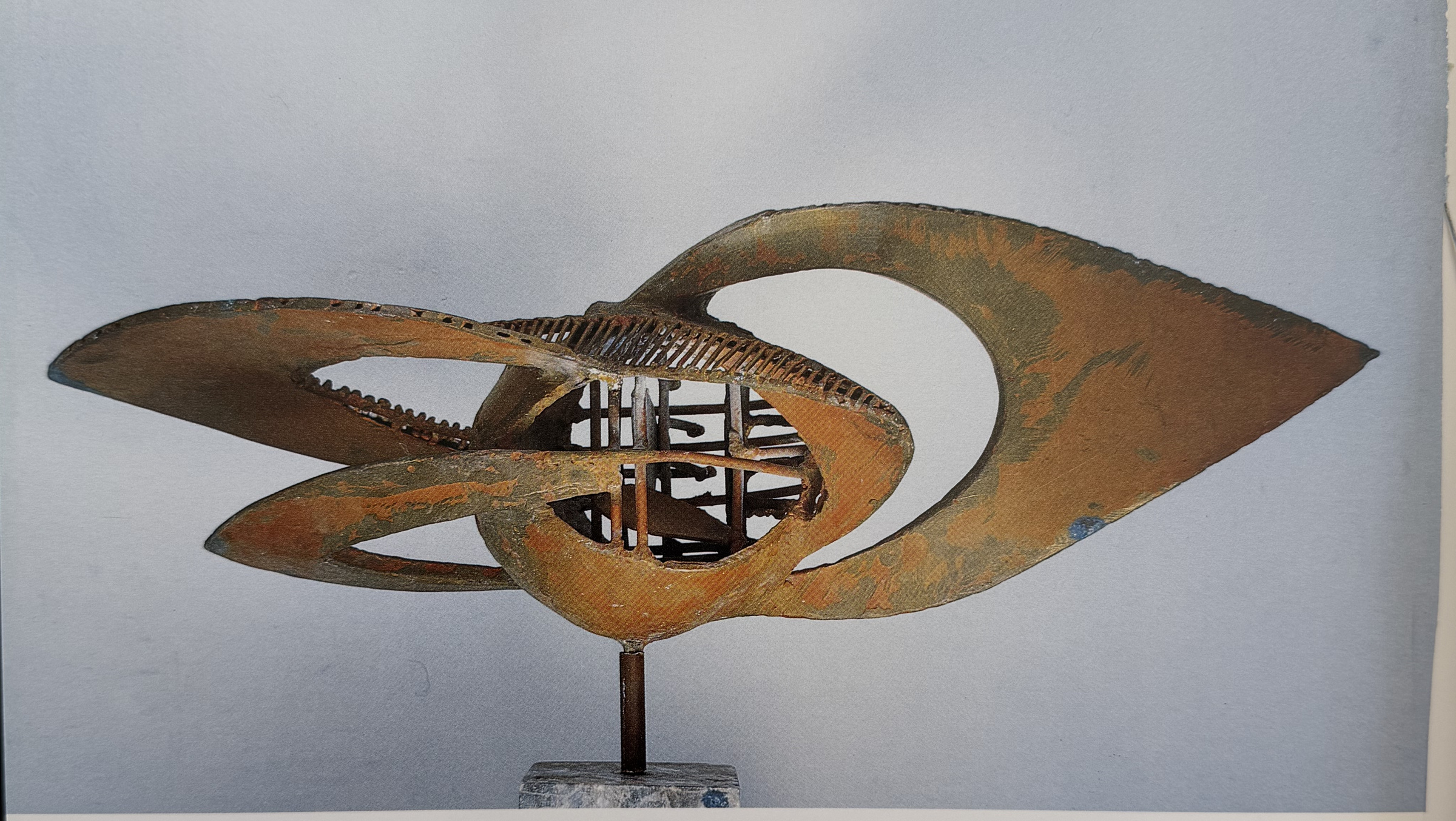
A bird reaching upwards and another spreading low above its base suggest different possibilities of movement. The discussion follows this interest in flight from the open structure of Aérostatique to the curves and repeated lines of a relief.
Eyes and inner worlds
Andreou’s sculpted eyes expose their interiors through bars, gaps, and overlapping plates. The essay considers the changing form of the eye across sculpture and relief, accompanied by Francis Villadier’s reflections on curiosity and the act of seeing.
Where sculpture meets colour
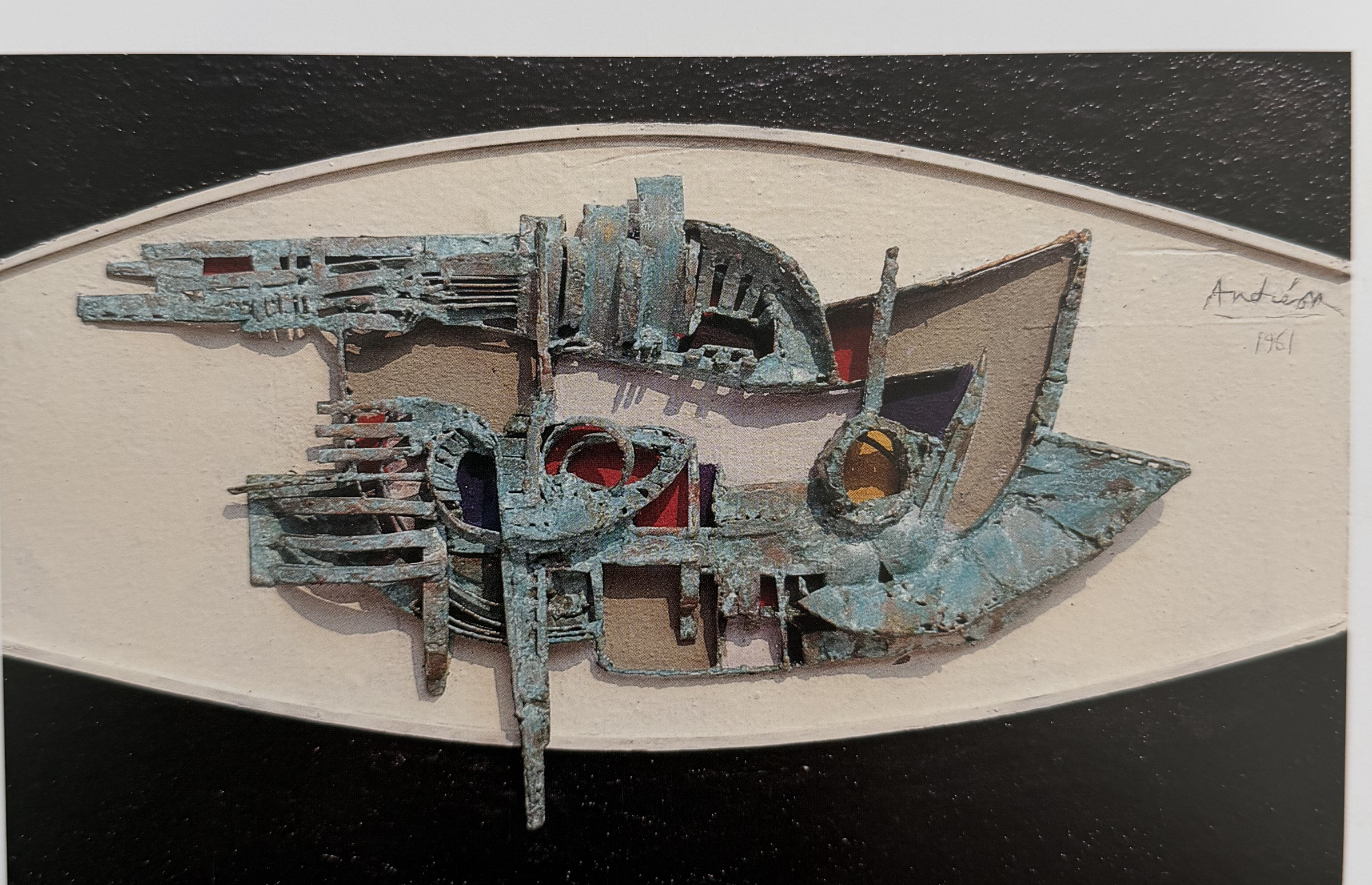
In the coloured reliefs, metal edges catch the light and cast shadows over painted recesses. A close reading of these surfaces considers how colour and construction depend on one another, bringing the concerns of painting into sculpture.

Foundries and moving landscapes
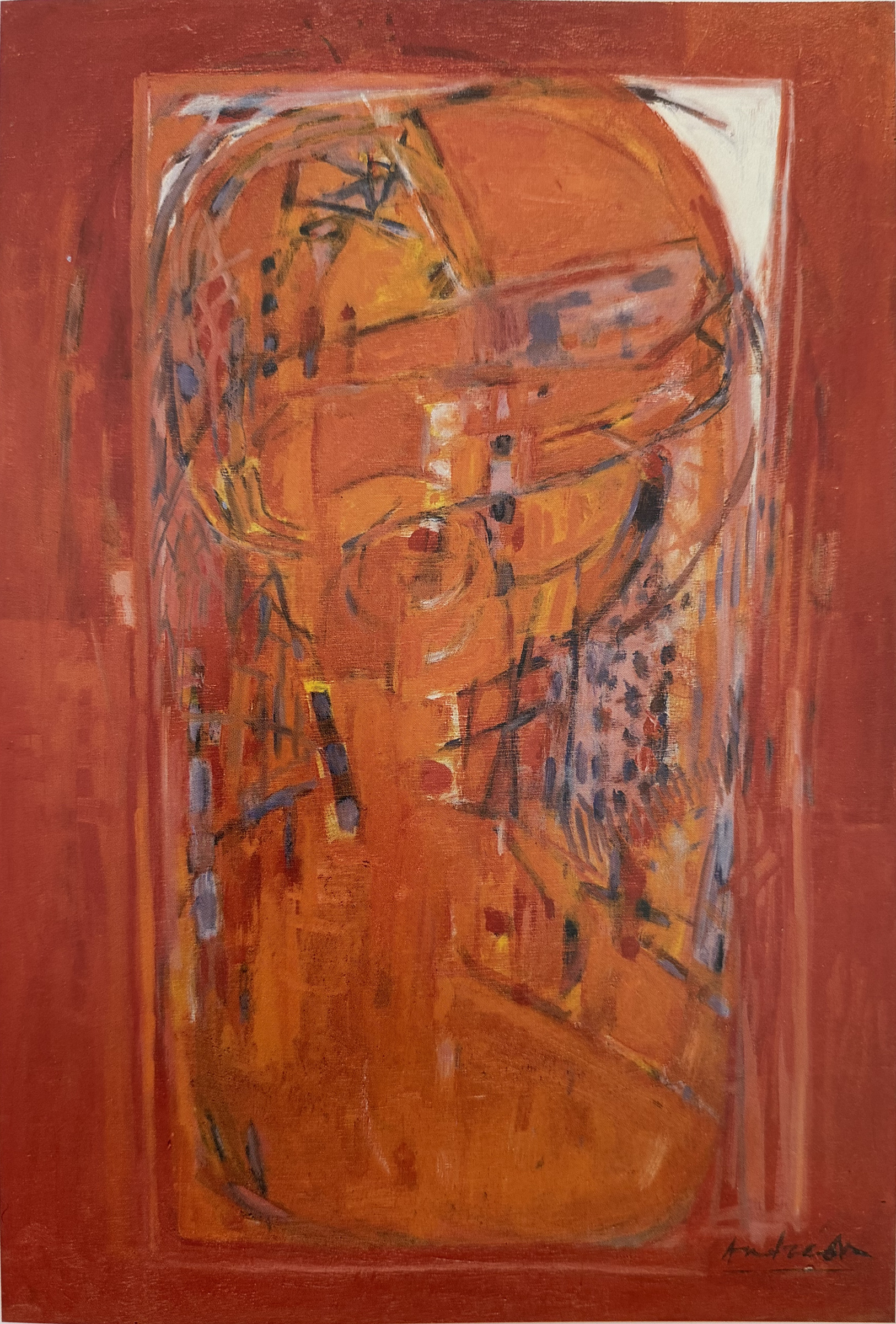
Sapfo Mortaki connects Andreou’s foundry and moving-landscape series with the heat of working furnaces and the changing view from a train. The essay considers how colour and intersecting marks give these subjects a sense of movement.
Women and mirrors
A woman and her reflection can be difficult to separate in Andreou’s mirror paintings. Overlapping contours and bands of colour connect the figure to her surroundings, while Sophia Kazazi’s reading introduces questions of beauty, youth, and passing time.
The windows of Amsterdam
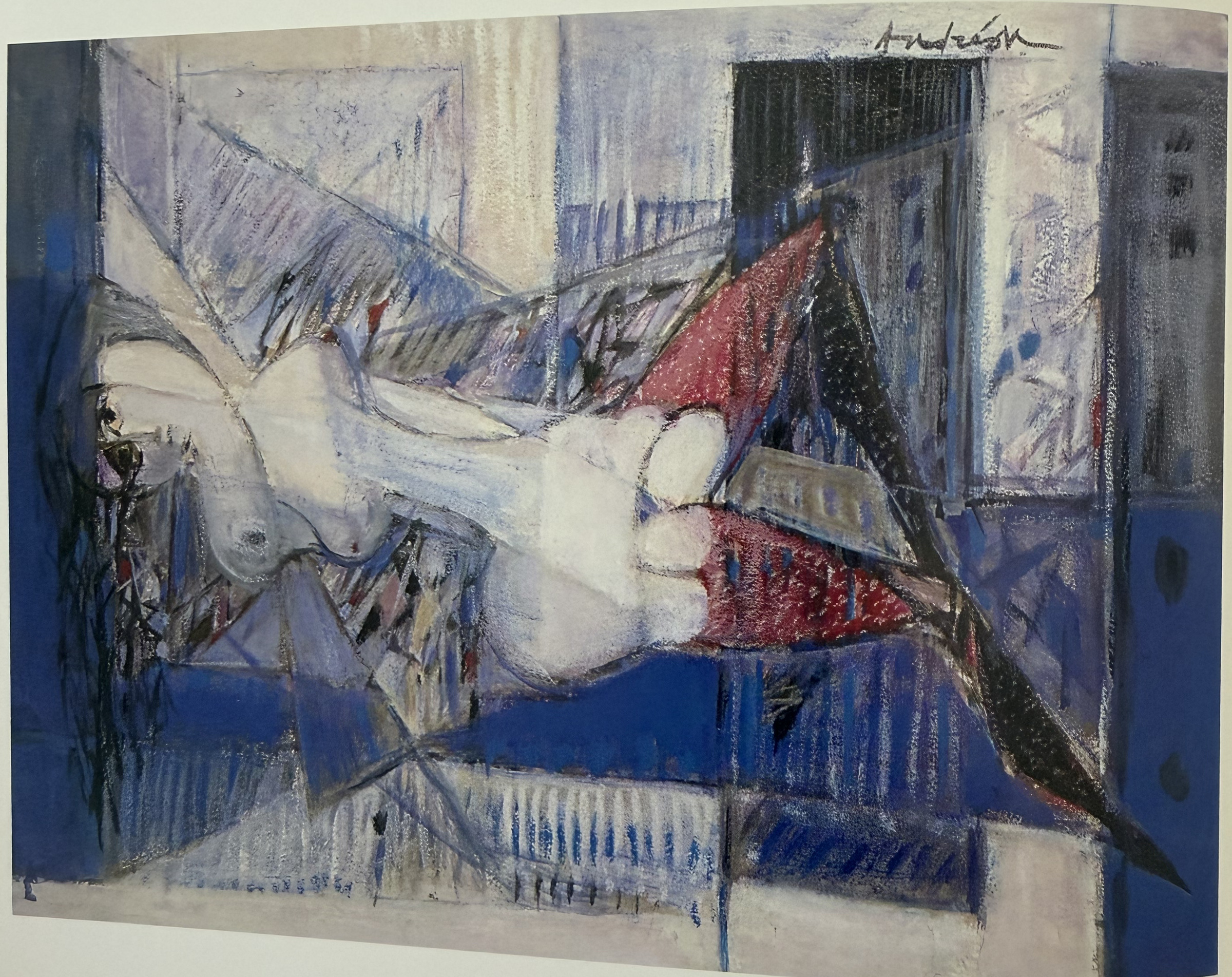
Andreou’s Amsterdam window paintings depict women on display in spaces divided by dark lines and planes. The essay considers their treatment of bodies and enclosed space alongside Sophia Kazazi’s reading of desire, transaction, and the spectator’s gaze.
The kiss and the couple
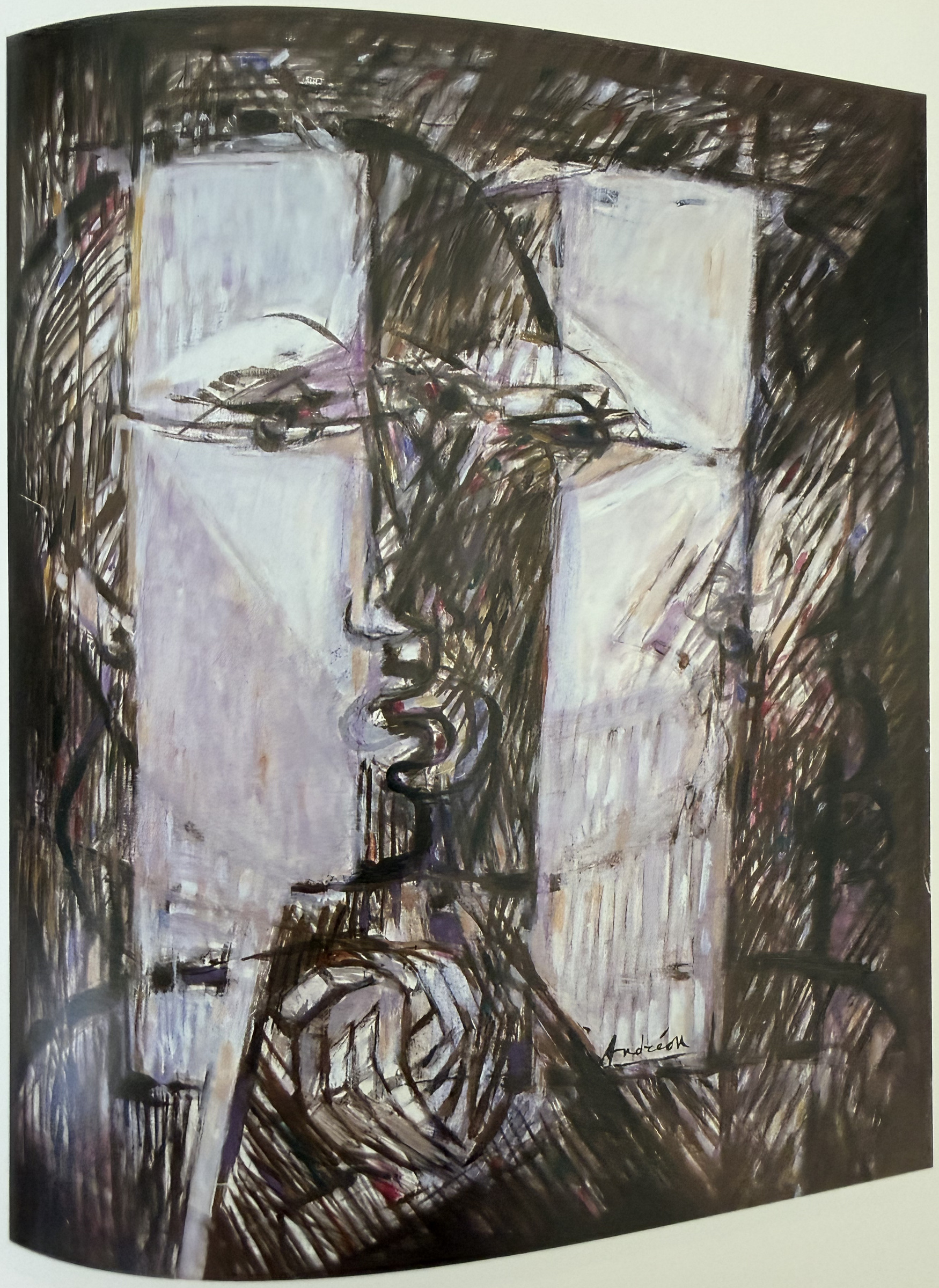
Faces meet along shared outlines, enclosed by curves and dense drawing. Andreou gives this closeness different forms in his paintings of lovers; Sophia Kazazi’s interpretation finds tenderness and unease in images that may suggest protection or farewell.
The family in Andreou’s painting
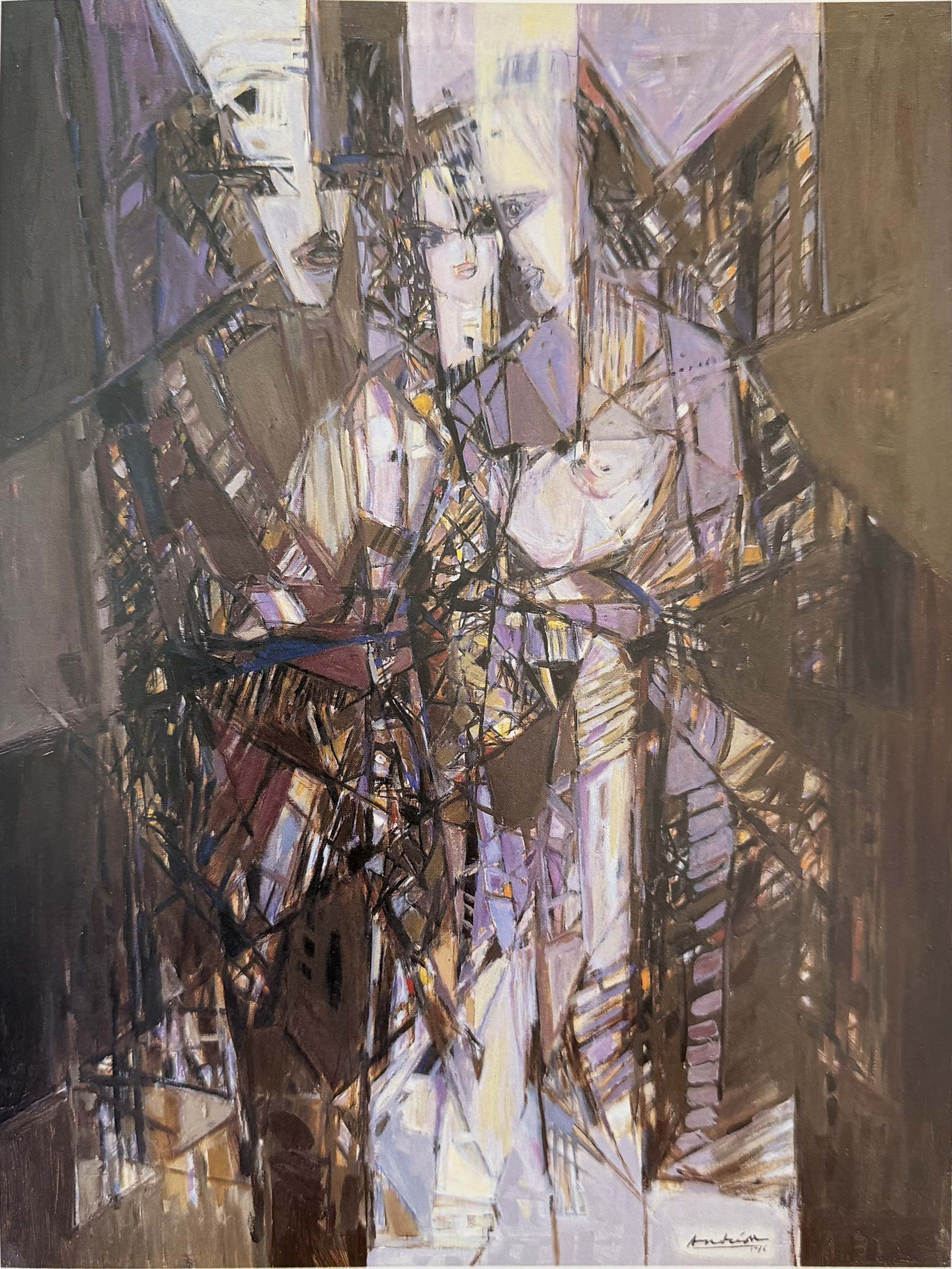
Heads gather closely while bodies merge with the surrounding drawing. The essay draws on Sophia Kazazi’s and Sapfo Mortaki’s interpretations of family life while following the lines and colours that hold these groups together.
Amour des vagues: women and the sea
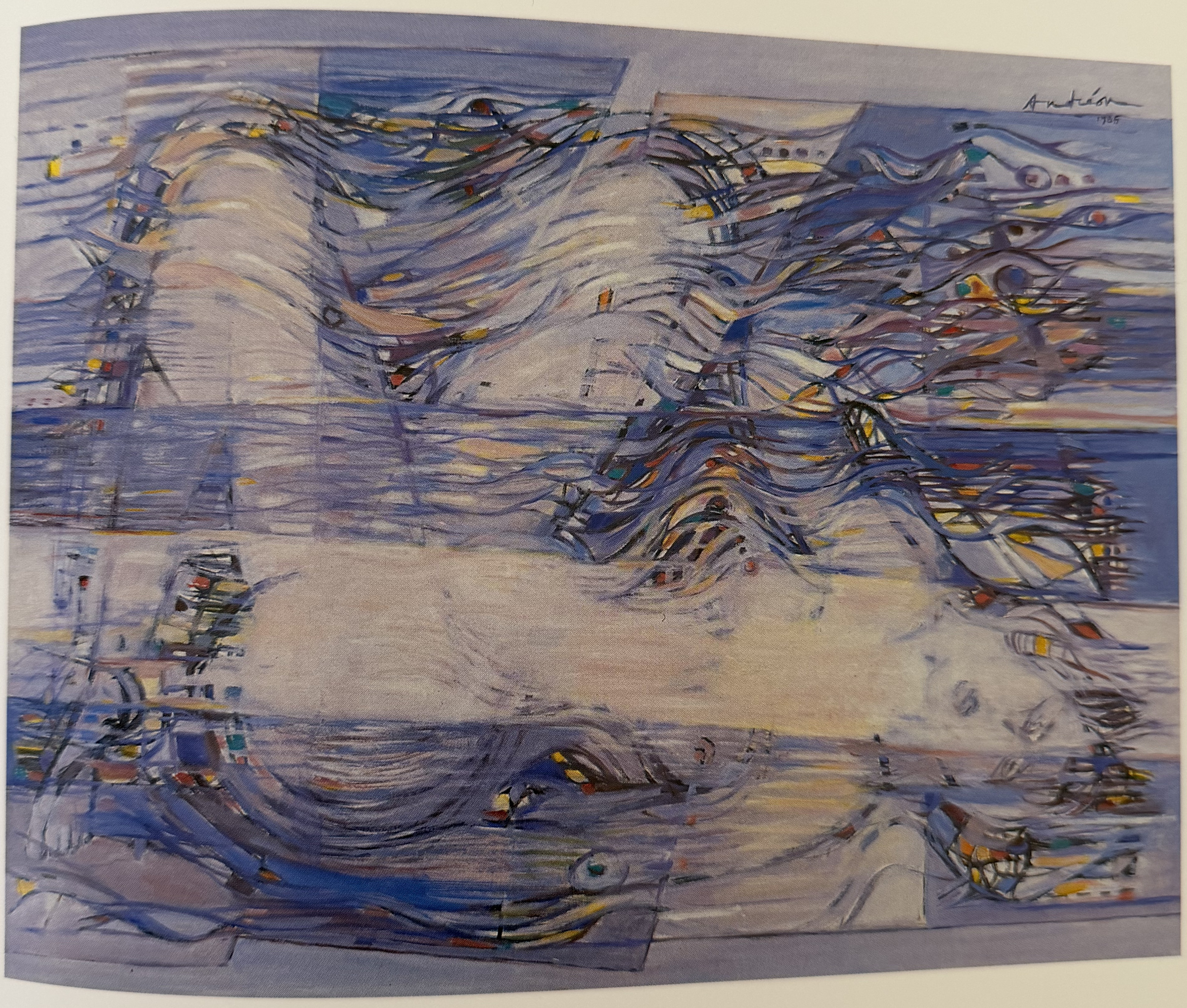
The curve of a shoulder or hip continues into the movement of water. Critical readings connect this merging of body and sea with sensuality, myth, and Mediterranean memory.
The tragic human figure
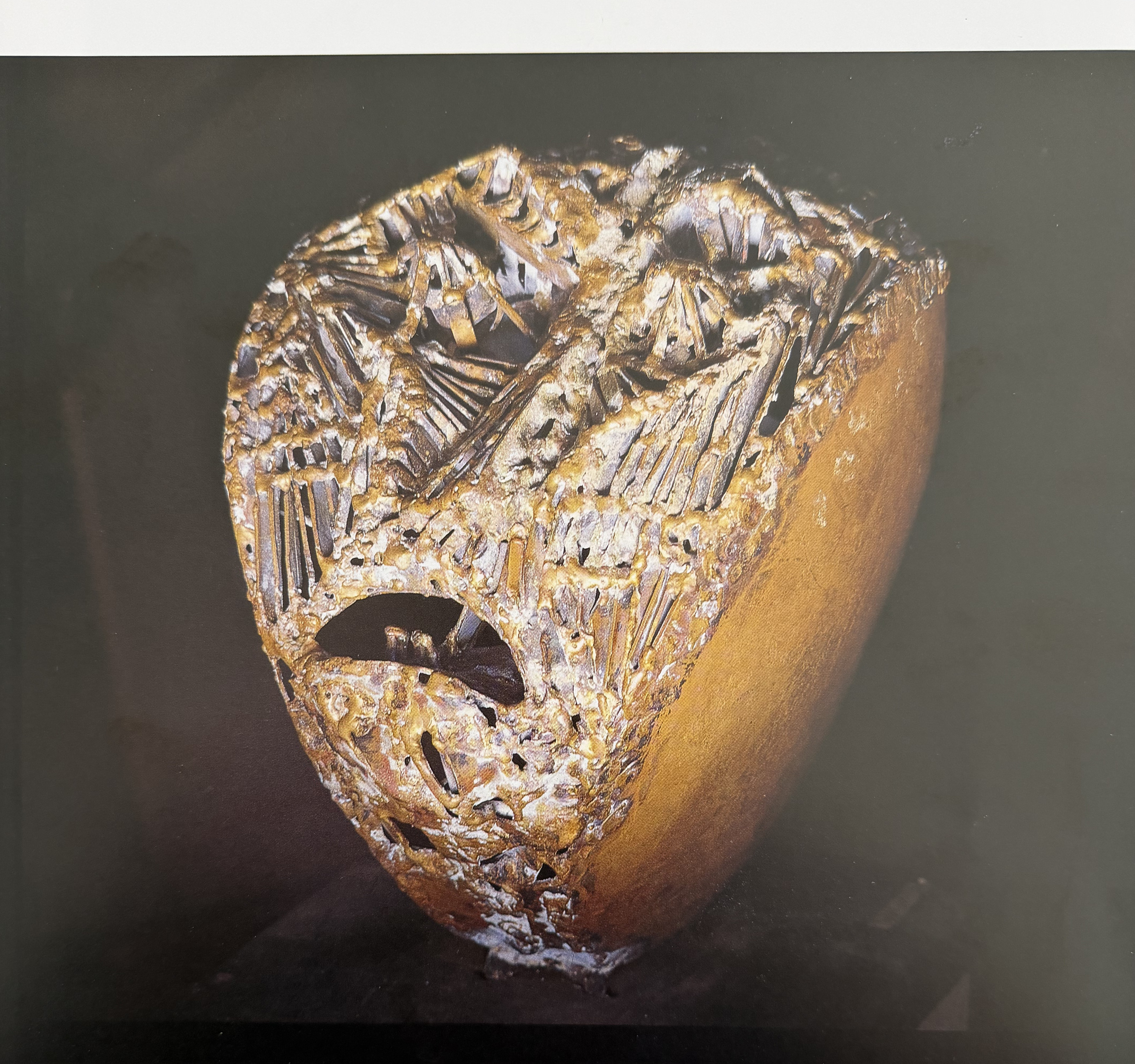
Broken surfaces and enclosing lines give form to suffering in Andreou’s sculpture and painting. Drawing on Sapfo Mortaki’s research and Andreou’s own words, the essay considers distorted heads and confined figures in relation to injustice and resistance.