
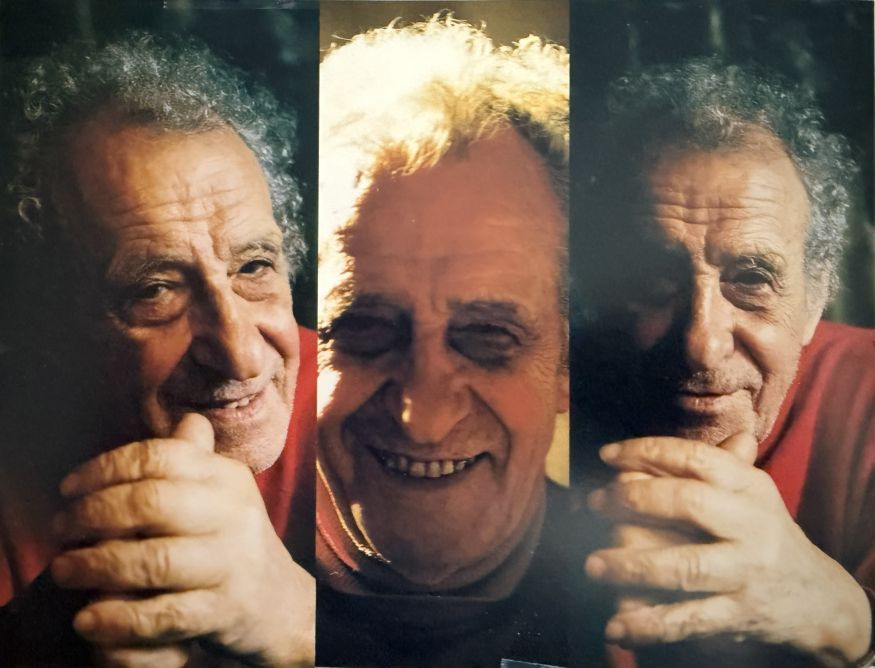
Constantine Andreou (1917–2007), known within his family as Kostas/Costas, was born in São Paulo and grew up in Athens before settling in France after the Second World War. He became best known as a sculptor, although painting and printmaking remained an important part of his work throughout his life. His method of shaping and oxy-welding brass sheets opened the sculpture to light and to the space around it, while the human figure gave his work its most persistent subject.
Andreou spent much of his adult life in and around Paris, but he never loosened his ties with Greece. From 1977 onward, he also maintained a home and studio on Aegina. He remembered Brazil for the warmth of its people, its music, and its vivid colour, and he credited Greece with giving him the archaic forms and sense of measure that stayed with him as an artist.
Family origins
Constantine was born in São Paulo on 24 March 1917, the second of eight children of Kimon Andreou and Athena Giakoumelos. His father named him after his own elder brother Constantine, who had died young around 1905.
On his father’s side, the family traced its origins to the Missios clan of the Zagorochoria in Epirus. During the persecutions associated with Ali Pasha of Ioannina around the turn of the nineteenth century, Constantine’s ancestors left Zagori and settled in Milies, in the Pelion mountains, where they used the surname Mitsou or Mitsios. Constantine’s grandfather Evangelos, who was born in Milies around 1848 and is also named in family papers as Mitsiou, later took the surname Andreou after a dispute over family land. The change of name did not settle the matter. His son Kimon continued to pursue it, as did Kimon’s widow, Athena, until 1957, when the family learned that the records on which the case depended had been lost during the Second World War.
Evangelos himself had left Milies long before the dispute ended. His work as a timber merchant first took him to Romania, where he met and married Orthodoxia Stavrinou. She had been born in Larnaca around 1853 to Kimon and Maria Stavrinou, and her family’s business interests had likewise brought them to Romania. The couple later moved to Egypt, where their son Kimon was born in Cairo in 1887. Orthodoxia died in São Paulo in 1915, while Evangelos died in Cairo in 1923.
Athena’s family was rooted in Gyri, a mountain village on Zakynthos. She was born there in 1889 to Spyridon and Marietta Giakoumelos and belonged to the Roros branch of the Giakoumelos family, which is recorded on the island from the fifteenth century and was closely involved in the leadership of the village. The family’s long association with Gyri can still be seen in the Roros windmill, which was built between 1838 and 1840 by the brothers Dionysios and Filippos Giakoumelos.
Childhood in Brazil and Athens
Constantine’s father had settled in Brazil before 1910, where he earned his living as a merchant and worked for a period with the Singer company. In 1913 he travelled to Greece for an arranged marriage with Athena, after which they sailed back to Brazil together. Their first five children, Anna, Constantine, Platon, Socrates, and Maria, were born there.
When he was eight, the family moved to Greece in the hope of developing new business opportunities. Spyros and Evangelos were born after they settled in Athens, where the family enterprise prospered at first. That prosperity ended when a ship carrying an entire cargo of merchandise was lost at sea. With the business gone and the household under financial pressure, Constantine had to leave secondary school and find work in furniture making.
His working day did not leave much time for formal study, so he attended evening classes in technical and decorative design at the Athens School of Arts and Crafts. Whenever he could, he drew in the museums of Athens, returning especially to the ancient and archaic collections. The painter Jenny Manousi, his drawing teacher, noticed his ability and encouraged him to pursue art seriously. With her support, Constantine left carpentry in 1936 and devoted himself to sculpture and drawing in her studio (Mortaki, 2010, p. 275).
By then his parents had returned to Brazil with some of the younger children, hoping to recover from the loss of the family business. Constantine remained in Greece with Platon and Socrates, and all three elder sons performed their Greek military service there. While Constantine continued his artistic training in Athens, Orthodoxia, the youngest of the eight children, was born in Brazil in 1939. The family came together again in Greece shortly before the Italian invasion of 1940.
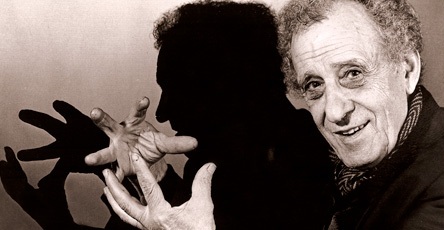
War and departure for Paris
Constantine was drafted into the Hellenic Army in 1940. During the occupation he became active in the Greek Resistance through EPON, but he continued to draw and sculpt whenever conditions allowed. When his work was criticised for its unconventional naturalism at the Panhellenic exhibition of 1942, the sculptor Memos Makris, the archaeologist Giannis Miliadis, and the painter Nikos Nikolaou came to his defence. Constantine’s friendship with Nikolaou began during these years and lasted for the rest of his life.
In 1944, while Athens was still under occupation, Constantine’s father died. Both parents had supported his work even when the family had very little, and he later dedicated the monumental sculpture Maternité to them and to the family they had held together. His seven siblings shared that devotion to their parents throughout their lives.
The end of the war gave Constantine a chance to continue his work abroad. After receiving a French government scholarship, he left Greece in December 1945 aboard the Mataroa, travelling with other Greek artists and intellectuals bound for Paris. He arrived with little money and had to earn his living as he began to establish himself as an artist.
The family after the war
While Constantine was beginning his life in Paris, his siblings again looked to Brazil. Platon and Socrates left Greece soon after liberation under a Brazilian programme that paid for the repatriation of citizens living abroad, and Evangelos followed them in 1947. Athena and her daughters joined them in the early 1950s. They were firmly established there by 1954, the year Anna married in Brazil. The sisters began returning to Greece during the 1960s. Evangelos moved from Brazil to the United States late in that decade before settling in Greece in 1986, while Platon and Socrates remained in Brazil until the late 1990s.
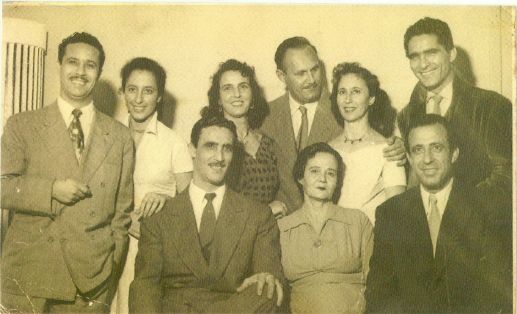
Several of Constantine’s siblings also made their lives in the arts. Anna, usually known as Annita (1915–2019), married the noted Greek-Austrian painter Demetrios “Mimis” Farmakopoulos (1919–1996), while Platon (1920–2008) worked as a commercial painter and owned a construction-supply shop in Copacabana. Socrates (1923–2010) followed a musical path and was an acclaimed phonetics and opera coach in Brazil. Their sister Maria (1924–2010) married George Fildisis of Kyparissia, who served as a prison warden.
The two younger brothers, Spyros and Evangelos, both became jewellers. Spyros (1928–2022) married Amalia Tsasi, with whom he had two daughters. Evangelos (1929–2018), a highly skilled jeweller and diamond setter, began his career in Brazil. While living in Rio de Janeiro, he made the ceremonial key to the city intended for President John F. Kennedy, whose planned visit did not take place after his assassination in 1963. His work later took him to the United States, where he married the Chilean Maria Eliana Vergara Edwards (of the noted Vergara and Edwards families of that country) in New York in 1975. Maria Eliana pursued her own career in nursing and became an intensive-care head nurse, while together they raised their sons, Kimon and Arys.
The youngest sister, Orthodoxia (1939–2022), pursued a long career with the United States Embassy, first in Brazil and later in Greece. Like Constantine, she never married or had children. Of the eight siblings, only Spyros and Evangelos became parents, and Constantine remained close to their daughters and sons. The shared hardships of the family’s early years left the siblings closely attached to one another and to the memory of their parents.
Paris: Le Corbusier and Sartre
Constantine briefly enrolled at the École des Arts Décoratifs and the École des Beaux-Arts after reaching Paris, but their academic teaching did not suit him. He soon left and returned to the habit that had served him in Athens, learning through close observation and through the work of his own hands. His first Paris showing took place at the Greek pavilion of the Cité Universitaire in 1946, and an independent gallery exhibition followed in 1951.
He later recalled that his first studio was above the restaurant at the Cité Universitaire’s Maison internationale. At the end of 1947 he found a small studio on rue Vercingétorix in Montparnasse (Recollection quoted in Mortaki, 2010, p. 283).
The need to support himself led Constantine in 1947 to Le Corbusier’s atelier, where he worked as a model maker until 1953. Their working relationship developed into a friendship, and Le Corbusier’s approach to architecture made Constantine think more deliberately about the place of colour and monumental form in sculpture. When the architect asked where he had learned to work, Constantine replied, “I am Greek. I carry the knowledge within me.”
Away from the atelier, Constantine joined the artists and writers who gathered in Saint-Germain-des-Prés. He became a close friend of Jean-Paul Sartre and belonged to Sartre’s inner circle. Sartre made his admiration for Constantine’s work clear in July 1959, when he devoted an article in Les Temps modernes to “Andréou” and compared his importance with that of Picasso and Mondrian.
Through the same Paris circle, Constantine came to know Gino Severini and Tsuguharu Foujita. Other sculptors were interested in the new way he worked, and César visited his studio at La Ville-du-Bois to learn Constantine’s method of oxy-welding.
A new language in metal
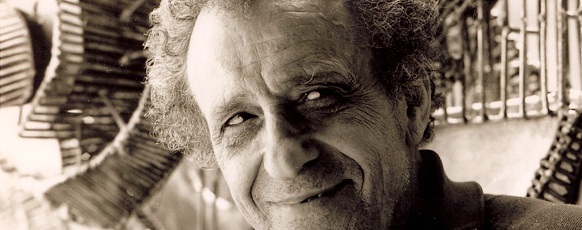
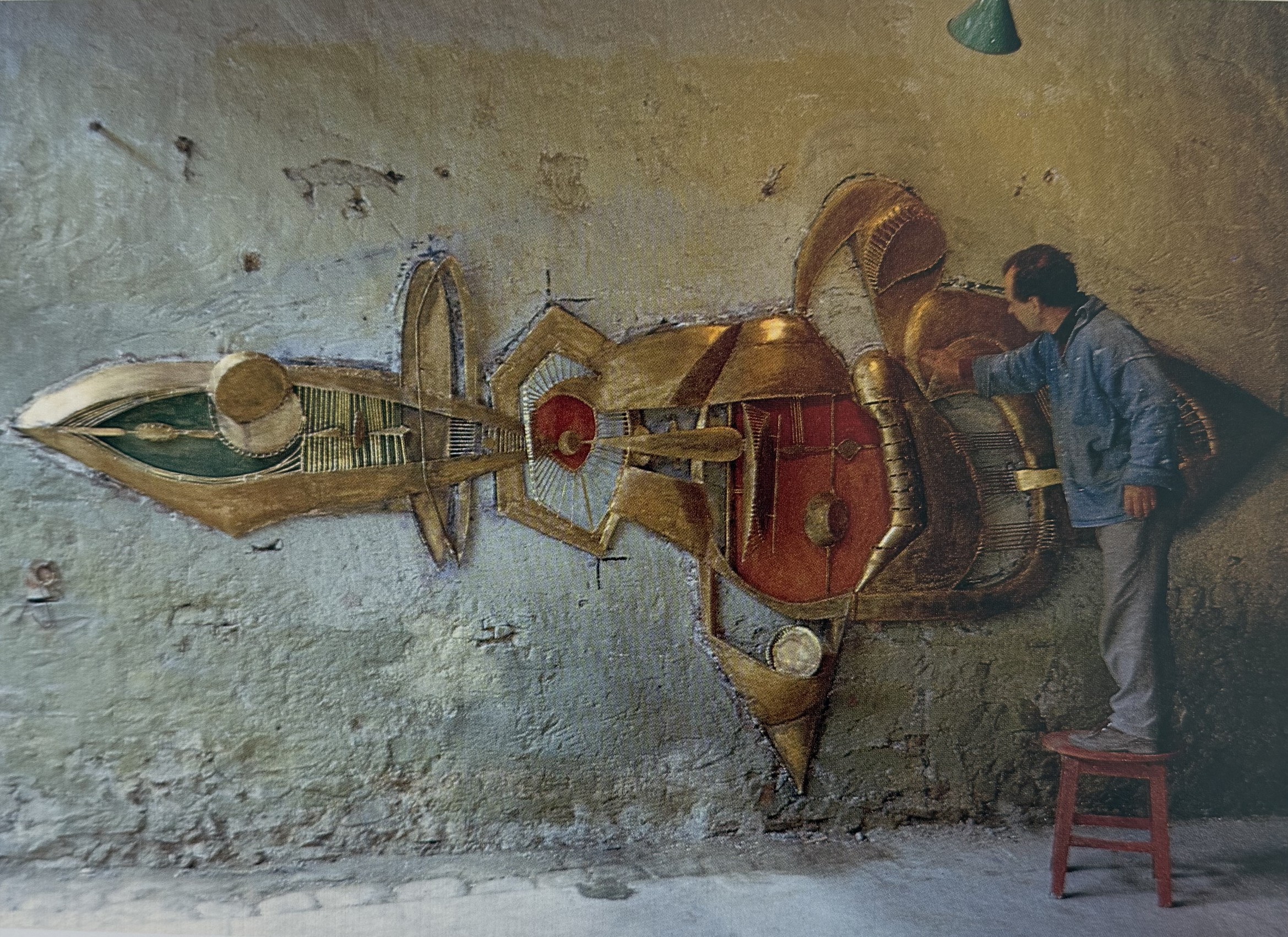
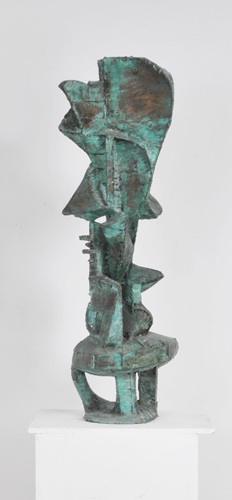
Constantine’s years with Le Corbusier coincided with the development of his own approach to sculpture. After seeing a head by Constantin Brancusi in 1947, he began to question the closed surface of a traditionally modelled or carved form. He later explained that he wanted to break through its egg-like shell and discover its “interior life.” By 1948 he had found a practical answer, shaping brass sheets directly and joining them with an oxyacetylene torch.
This method allowed him to build a sculpture from separate planes instead of carving it from a solid block. He would start with a drawing, then cut and hammer the metal before welding the elements together. As he worked, the sculpture could depart from the initial drawing (Mortaki, 2010, p. 286). As the openings admitted light, the form changed with the viewer’s position, and Constantine left the cuts and welded joins visible rather than concealing how the piece had been made. In developing the process, he drew on the understanding of materials he had acquired while making furniture in Athens.
Sculpture established Constantine’s reputation, but he brought the same passion to painting (Mortaki, 2010, p. 330). The human figure remained at the centre of his work, particularly in his studies of couples and of motherhood. In the Sirènes, he opened spaces within the figures so that their profiles and volumes changed as they were viewed. He carried a similar concern with form into the coloured reliefs of the Eye and Sun series, while Egg-Family brought the organic shape that had first preoccupied him into a work about family relationships. Birds and imagined creatures appeared elsewhere in his work.
During the early 1960s, Constantine began to work more extensively in printmaking. He pressed and worked the plate so that line could create a sense of depth, bringing habits formed in sculpture onto the printed sheet. His practical range also led him to design jewellery and undertake work for the theatre.
An international career
By the early 1950s, Constantine was exhibiting regularly in France and Greece, and he later returned to Brazil with his work. In Paris, he showed at the Salon d’Automne and the Salon de Mai and took part in exhibitions of contemporary sculpture at the Musée Rodin. These appearances led to biennials in Antwerp, Paris, Ljubljana, and Venice. In 1966 he represented Greece at the 33rd Venice Biennale alongside the sculptor Clearchos Loukopoulos in a national presentation commissioned by Tony Spiteris.
As his sculptures grew in scale, Constantine needed more room than his Paris studio could provide. In 1967 he established a larger studio at La Ville-du-Bois, south of the city, and made it his principal base in France. The house brought his different activities together, with a workshop for sculpture, an upstairs space for paintings and drawings, a printmaking press, and large sculptures outdoors (Villadier, quoted in Mortaki, 2010, p. 292). A retrospective at Le Havre followed in 1971. His relationship with La Ville-du-Bois lasted for the remainder of his life. In 1998, La Ville-du-Bois named its municipal library the Bibliothèque Constantin Andréou in his honour. Constantine marked the occasion by giving twenty works to the town, including Maternité and the large paintings Le Cirque and Le Dîner, which were installed in public buildings.
His life in France did not prevent him from spending long periods in Greece. On the advice of his friend Nikos Nikolaou, Constantine began looking for a place on Aegina and in 1977 bought an old winery built in 1601, which he converted into a home and studio. Nikolaou was already part of the island’s community of artists, which also included Christos Kapralos and Yiannis Pappas. Constantine used the house both for holidays and for sustained periods of work. During the summer of 1985, it was there that he created the twenty paintings of Polymorphs, a series inspired by the work of the Greek poet and art critic Evangelos Andreou, who had no familial connection to the artist.
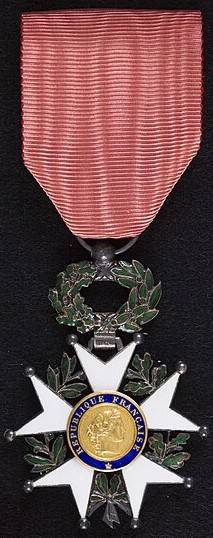
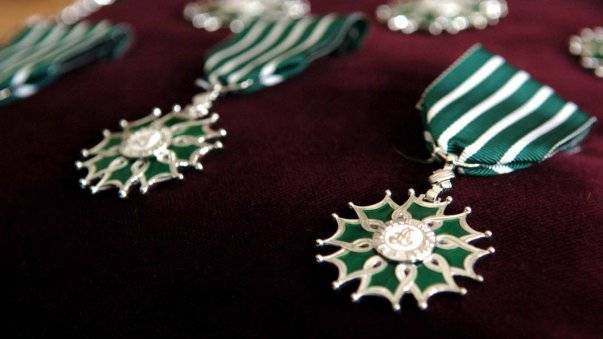
Recognition for Constantine’s work continued to grow. He served as president of the sculpture committee of the Salon d’Automne in 1982 and received the Grand Prix Antoine Pevsner in 1988. A major survey opened at the Municipal Gallery of Athens in 1998, followed by another at the Teloglion Fine Arts Foundation in Thessaloniki in 2004. France appointed him a Chevalier of the Légion d’honneur in 2000 and an Officier de l’Ordre des Arts et des Lettres in 2005.
His work entered public and private collections around the world. In Greece, it is held by the National Gallery in Athens, the Teloglion Fine Arts Foundation, and the B. and E. Goulandris Foundation. Paris holdings include the Museum of Modern Art of the City of Paris and the Musée des Arts Décoratifs.
Return to Greece and legacy
Constantine returned permanently to Greece in 2003 and divided his time between Athens and Aegina. He continued to draw and paint while recording ideas for work he still hoped to undertake. In 2004 he established the Costas Andreou Foundation to support younger artists and encourage public interest in the visual arts.
He died at his home in Athens on 8 October 2007 at the age of ninety. In an earlier interview, Constantine had described himself simply as a worker who loved truth and lived for art. His place in modern Greek sculpture rests above all on the method he devised for shaping and oxy-welding brass, which he developed over an international career lasting more than half a century. Even during the decades he lived in France, Greece and his family remained at the centre of his life.
Sources
The family history in this biography comes from genealogical records and family papers, together with oral history preserved by The Constantine Andreou Archive.
- Dubreucq, Michèle. Andréou : 40 ans de sculpture. Chennevières-sur-Marne: Éditions Jauffray, 1975. Title page and selected pages (Hellenic Diaspora).
- Andreou: Rétrospective 1945–1970: Sculptures, dessins, gouaches, gravures. Bourges: Maison de la Culture de Bourges, 1970. National Gallery of Greece library record.
- Ανδρέου, γλυπτική [Andreou, Sculpture]. Thessaloniki: Τελλόγλειο Ίδρυμα Τεχνών Α.Π.Θ., 2004. National Gallery of Greece library record.
- Bordes, François. “Exil et création: des penseurs grecs dans la vie intellectuelle française.” In Destins d’exilés. Paris: Le Manuscrit, 2011.
- Bourgeois, Michel. ANDREOU. Paris: Les Editions du Temps, 1984.
- Cabanne, Pierre. “Andreou: The Eye of the Sun.” Studio International 168, no. 857 (September 1964): 105.
- Cabanne, Pierre, et al. ANDREOU ΓΛΥΠΤΙΚΗ SCULPTURE: Bas-reliefs in Color. Athens: Bastas Editions, 1999.
- Christou, Chrysanthos. “Ανδρέου Κώστας” [“Andreou, Kostas”]. In Λεξικό Ελλήνων Καλλιτεχνών: Ζωγράφοι, γλύπτες, χαράκτες, 16ος–20ός αιώνας [Dictionary of Greek Artists: Painters, Sculptors, and Engravers, Sixteenth to Twentieth Centuries], edited by Eugenios D. Matthiopoulos, vol. 1, 57. Athens: Melissa, 1997.
- Christou, Chrysanthos, and Myrto Kouvakali-Anastasiadi. Νεοελληνική Γλυπτική 1800–1940 [Modern Greek Sculpture, 1800–1940]. Athens: Εμπορική Τράπεζα της Ελλάδος, 1982.
- Ferrier, Jean-Louis. Andréou. Geneva, 1959.
- France. Ministère de la Culture et de la Communication. “Nominations dans l’Ordre des Arts et des Lettres, janvier 2005.” Accessed August 31, 2026.
- France. “Décret du 31 décembre 1999 portant promotion et nomination.” Journal officiel de la République française, January 1, 2000.
- Greece. Ministry of Culture. “Greek Participations.” Greece at Venice. Accessed August 31, 2026.
- Ionian University. ANTETI. “Ο ανεμόμυλος του Ρορού στο Γύρι της Ζακύνθου” [“The Roros Windmill at Gyri, Zakynthos”]. February 1, 2025.
- Kalligas, Marinos. [Article on the Panhellenic Exhibition]. Ελεύθερον Βήμα, June 19, 1942.
- Kyriazi, Nelly, ed. Κώστας Ανδρέου [Kostas Andreou]. Athens: Πινακοθήκη Δήμου Αθηναίων, 1998.
- La Ville-du-Bois. “Bibliothèque Constantin Andréou.” Accessed August 31, 2026.
- Melidonis, Anestis. “Kostas Andreou: An Overlooked Figure in Modern Greek Sculpture.” Hellenic Diaspora Foundation. Accessed August 31, 2026.
- Menegatou, Sisy. “Κονσταντίν Ανδρέου: Μια σύντομη συνέντευξη” [“Constantin Andreou: A Short Interview”]. Εικαστικά, no. 49 (January 1986): 11.
- Mortaki, Sapfo A. Η καλλιτεχνική μετανάστευση στην Ελλάδα: από τον 19ο στον 20ό αιώνα (1870–1970): η περίπτωση του Κωνσταντίνου Ανδρέου [Artistic Migration in Greece from the Nineteenth to the Twentieth Century (1870–1970): The Case of Constantine Andreou]. Doctoral thesis, Aristotle University of Thessaloniki, 2010. Main volume, pp. 275, 283, 286, 292 and 330. EKT record; read both volumes.
- Mortaki, Sapfo A. Η μετανάστευση Ελλήνων καλλιτεχνών στο Παρίσι από το 19ο στον 20ό αιώνα: Η περίπτωση του Κωνσταντίνου Ανδρέου [The Migration of Greek Artists to Paris from the Nineteenth to the Twentieth Century: The Case of Constantine Andreou]. Athens: Παπαζήση, 2014. Related publication based on the 2010 dissertation. Library record (Aristotle University of Thessaloniki).
- Mortaki, Sapfo, and Vasileios Pappas. “The Integration of Two Greek Cultural Immigrants of the 15th and 20th Century: The Cases of Cardinal Bessarion and the Artist Constantine Andreou.” New Zealand Online Journal of Interdisciplinary Studies.
- National Gallery of Greece. “Andreou, Konstantinos.” Accessed August 31, 2026.
- National Portrait Gallery. “Constantine (‘Costas’) Andreou.” Accessed August 31, 2026.
- Sahini, Angeliki. “Μερικές παρατηρήσεις στο έργο του Κ. Ανδρέου” [“Some Observations on the Work of K. Andreou”]. Εικαστικά, no. 54 (June 1986): 31.
- Sartre, Jean-Paul. “Andréou.” Les Temps modernes, no. 161 (July 1959).
- Spiteris, Tony. “Στα ατελιέ των Ελλήνων καλλιτεχνών του Παρισιού” [“In the Studios of the Greek Artists of Paris”]. Ζυγός, no. 2 (December 1955): 21.
- Zois, Leonidas Ch. Λεξικόν Ιστορικόν και Λαογραφικόν Ζακύνθου [Historical and Folklore Dictionary of Zakynthos]. 2 vols. Athens: Εκ του Εθνικού Τυπογραφείου, 1963.
Further reading and online resources
- Hellenic Diaspora Foundation: illustrated essay on Constantine Andreou
- National Gallery of Greece: artist and collection record
- Hellenic Ministry of Culture: Greek participation at the Venice Biennale
- Bibliothèque Constantin Andréou, La Ville-du-Bois: official website
- National Portrait Gallery, London: Ida Kar’s 1954 portraits of Constantine Andreou
- François Bordes on Greek intellectuals in postwar France and the Mataroa generation
- Ionian University ANTETI: the Giakoumelos-Roros windmill at Gyri
- French Government: Légion d’honneur decree